Essential Street Food Guide to Bangkok for First Timers
Bangkok’s street food culture is a defining element of the city’s daily life. For first-time visitors, the sheer variety of stalls, carts, and open-air kitchens can feel overwhelming. Yet understanding the patterns and practices behind this culinary landscape makes the experience more approachable and rewarding. Rather than a single type of food, Bangkok’s street food scene represents a complex system of local ingredients, cooking techniques, and social habits that have evolved over decades.
This guide is structured to help newcomers navigate that system with clarity. It does not promise any single best dish or guarantee a particular outcome. Instead, it outlines common frameworks used by residents to choose where and what to eat. Observing these patterns can help visitors engage with street food in a way that feels natural and informed, without relying on rigid recommendations or overstated claims.
What follows is an exploration of how street food operates in Bangkok—how stalls are organized, which dishes appear most frequently, and what local eating habits look like in practice. The information is drawn from widely observed practices and general cultural knowledge, not from any single authoritative source. Every visitor’s experience will differ based on timing, location, and personal preference.
Understanding Bangkok’s Street Food Culture
Street food in Bangkok is not a recent phenomenon. It has been a part of the urban fabric for generations, shaped by migration, market economics, and the rhythms of daily life. Most stalls operate within a loose but consistent framework. Vendors often specialize in a narrow range of dishes, sometimes only one or two items, which allows them to refine their preparation methods over years or decades. This specialization is one reason why consistency can vary from stall to stall, even when the dishes appear similar.
The timing of meals also plays a role. Many stalls open in the late morning and continue through the afternoon, while others appear only in the evening, particularly in areas that transform into night markets. Breakfast is typically lighter—rice porridge or noodle soups—while lunch and dinner see a wider array of grilled meats, curries, and stir-fries. Desserts and snacks, such as mango sticky rice or coconut pancakes, are available throughout the day but are more common in the late afternoon and evening.
Pricing is generally transparent, with most stalls displaying menus or listing prices on boards. However, some stalls do not post prices, and in those cases, it is common to confirm the cost before ordering. Payment is typically in cash, as card readers are rare among smaller vendors. This cash-based system is a practical consideration that visitors may want to plan for.
Iconic Dishes to Try
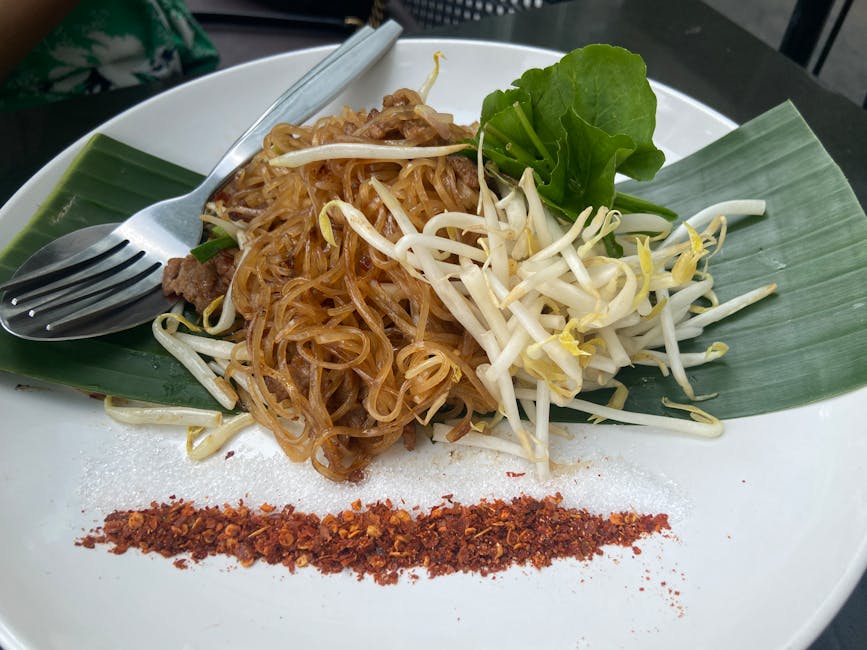
Several dishes are widely associated with Bangkok’s street food. Pad thai, a stir-fried noodle dish with tamarind sauce, bean sprouts, and crushed peanuts, is one of the best known. Its preparation varies significantly between vendors. Some versions are sweeter, others more sour, and the choice of protein—shrimp, chicken, or tofu—affects the overall balance. Observing how a vendor prepares pad thai can give clues about their approach: fresh ingredients, careful temperature control, and the order of adding components all matter.
Som tam, a green papaya salad, offers a different sensory experience. It is pounded in a mortar with garlic, chili, lime, fish sauce, and sometimes dried shrimp or peanuts. The heat level is adjustable, though many Bangkok vendors prepare it moderately spicy by default. First-time tasters may prefer to ask for less chili if they are uncertain about their tolerance. The salad is commonly eaten alongside sticky rice or grilled chicken, forming a complete meal.
Mango sticky rice is a dessert that combines glutinous rice cooked in coconut milk with slices of ripe mango. The quality depends heavily on the freshness of the mango and the sweetness of the coconut milk. Vendors often prepare it in the morning and serve it until supplies run out. Another popular option is boat noodles, a rich broth with pork or beef, often served in small bowls that encourage sampling several portions. Each of these dishes reflects broader patterns in Thai cooking: balancing sweet, sour, salty, and spicy flavors within a single plate.
Where Locals Eat – Neighborhoods and Markets
Residents of Bangkok tend to eat at stalls that are close to their homes or workplaces, but certain areas are known for a high concentration of established vendors. Yaowarat, Bangkok’s Chinatown, is one such area. Its streets fill with stalls after sunset, offering a wide range of seafood, noodle dishes, and roasted meats. The density of choices means that visitors can observe which stalls attract long queues—a common local signal of popularity.
Sukhumvit Road, particularly between Soi 38 and Soi 55, contains many stalls that cater to both locals and office workers. These stalls are often clustered near BTS stations, making them easy to access. The food here tends to be diverse, reflecting the mix of Thai and international residents. In contrast, the areas around Khao San Road are more tourist-oriented, though some long-standing vendors remain. For a less commercial experience, the neighborhoods of Bang Rak, Charoen Krung, and the old town around Wat Pho offer stalls that serve primarily local clientele.
Markets such as Or Tor Kor and Khlong Toei are worth visiting not only for prepared food but also for fresh ingredients. These markets often have dedicated sections where vendors cook simple dishes using produce from the same market. Observing how ingredients are sourced and prepared can deepen one’s understanding of the food system behind street cuisine.
Navigating Menus and Ordering
Menus at street stalls are often written in Thai, though many in central areas include English translations or pictures. When a menu is not available, pointing at what others are eating or at the ingredients on display is a common and accepted method. Vendors are generally accustomed to non-Thai speakers and will work through gestures if needed. Learning a few basic phrases—such as “mai phet” (not spicy) or “ao” (I want)—can make the interaction smoother, though it is not necessary.
Ordering involves a sequence that may differ from restaurant norms. Typically, the customer states the dish, then the desired level of spiciness, and any modifications such as omitting certain ingredients. Payment happens either before or after eating, depending on the stall. Many vendors will indicate a seat or area where the food will be brought, while others expect customers to wait at the cart. Observing how regular customers behave at each stall provides the clearest guidance. Patience and attentiveness to the vendor’s workflow are helpful attitudes.
Portion sizes vary. Some stalls serve single-plate portions, while others offer smaller options meant to be shared. It is common to see groups ordering several dishes and eating family-style. For solo diners, a single plate of noodles or a bowl of soup is typically sufficient. The lack of strict portion standardization means that asking the vendor for the right amount for one person is a practical approach.
Embracing the Street Food Experience
Engaging with Bangkok’s street food is as much about observation as it is about eating. The process of finding a stall, watching the cooking, and interacting directly with the vendor forms a cycle that repeats throughout the day. Each stall operates within its own context—the neighborhood, the time of day, the regular customers—and that context shapes the food. Recognizing this interdependence helps visitors appreciate why the same dish can taste different from one place to another.
No single visit can cover everything. The goal is not to sample every dish but to understand how the system works and to participate in it comfortably. Over time, patterns become familiar: the sound of a mortar pounding som tam, the steam rising from a noodle broth, the careful arrangement of grilled meats on a charcoal fire. These sensory details are part of what makes street food in Bangkok a method of eating that is both practical and culturally rich.
For first-timers, approaching the experience with curiosity and patience allows for a more nuanced understanding. There is no single correct way to eat street food, only a set of common practices that can be adapted to individual preferences. By focusing on the process rather than on outcomes, visitors can engage with Bangkok’s street food on its own terms.